For Veterans
Resources created for Veterans and in collaboration with Veterans living with chronic pain.
Are you a Veteran living with chronic pain? You’re not alone. Chronic pain affects 2 in 5 Canadian Veterans, with female Veterans experiencing a higher rate of approximately 50%. Each Veteran’s experience with pain is unique, and the severity and impact on daily life can vary greatly.
A key factor affecting pain levels in Veterans is their transition from military to civilian life. While some Veterans adapt easily, others may struggle with losing their sense of identity and finding a new purpose. Military culture often emphasizes putting the mission first and self-care last, along with avoiding displays of vulnerability. As a result, many Veterans may downplay their pain or put off seeking treatment.
Some Veterans face greater challenges managing pain due to healthcare disparities, past trauma, and life transitions. For example, Black, Indigenous, and other Veterans of colour are more likely to experience higher levels of pain than white Veterans. Similarly, 1 in 5 Veterans who identify as part of gender or sexual minorities reports higher pain levels compared to the general Veteran population. Additionally, more than 3 in 5 Veterans with chronic pain (over 60%) have also been diagnosed with a mental health condition, which can significantly impact their pain, treatment, and overall well-being.
Veterans living with chronic pain benefit from care that’s personalized to their unique needs, values, and goals. It’s also important to consider their readiness for treatment. By focusing on the whole person and offering tools like pain education and self-management techniques, Veterans can gain better control over their pain and improve their overall quality of life.
Get started with the resources below!
All the resources included were co-created with or selected by Veterans.
Caring for Veterans requires understanding the unique health challenges stemming from their military service, such as chronic pain, PTSD, and physical injuries. Listening to their experiences, building trust, and showing respect are essential for providing meaningful and effective care. Being aware of available resources and support systems, like the Chronic Pain Centre of Excellence’s Communication Tool, can help clinicians enhance communication and foster stronger patient-provider relationships.
The Most Painful Podcast
The Most Painful Podcast
Topic
Pain
Developed by: The Chronic Pain Centre of Excellence for Canadian Veterans.
Summary: This podcast covers all aspects of chronic pain by presenting evidence-based information that provides better insight into chronic pain. Recent Government of Canada research found that Veterans are twice as likely to suffer from chronic pain compared to others in the Canadian population. We aim to investigate how this impacts Veterans, and their families. We explore topics such cannabis and psychedelics, and do they help treat chronic pain? We also investigate back surgery, military identity and what military and professional athletes have in common with identity. The evidence-based information on the show will help Veterans, clinicians, researchers, and anyone suffering from chronic pain. It is a 360-degree approach to education on chronic pain.
The Most Painful Podcast offers
Podcasts
Yoga therapy for Veterans
Yoga therapy for Veterans
Topic
Developed by: The Chronic Pain Centre of Excellence for Canadian Veterans in collaboration with Neil Pearson PT, MSc, C-IAYT, ERYTS00.
Summary: This one-page infographic summarizes research findings about how yoga therapy is used by Veterans to manage pain. Learn about the benefits of yoga reported by Veterans, tips on how to get started, and links to YouTube Channels to give yoga a try.
Yoga therapy for Veterans offers
Articles
Exploring Veterans’ Use of Cannabis for Chronic Pain
Exploring Veterans’ Use of Cannabis for Chronic Pain
Topic
Developed by: The Chronic Pain Centre of Excellence for Canadian Veterans in collaboration with Gregory K. Tippin, PhD, Vikas Parihar, Pharm.D.
Summary: This 2-minute video summarizes early insights from a research study that sought to better understand Veterans’ experiences with using cannabis. Learn how cannabis was helpful for some Veterans with chronic pain and what common questions and concerns they raised to inform future research.
Exploring Veterans’ Use of Cannabis for Chronic Pain offers
Videos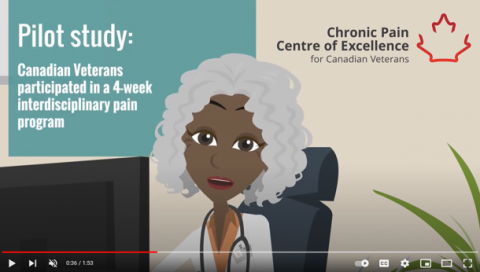
Effectiveness of Interdisciplinary Pain Care for Veterans
Effectiveness of Interdisciplinary Pain Care for Veterans
Topic
Developed by: The Chronic Pain Centre of Excellence for Canadian Veterans in collaboration with Bryan Cater and Sharon Horan.
Summary: With this 2-minute video, you will be introduced to the model of interdisciplinary care in a way that is easy to understand, and learn how it was helpful for a group of Veteran patients in St. John’s, Newfoundland.
Effectiveness of Interdisciplinary Pain Care for Veterans offers
Videos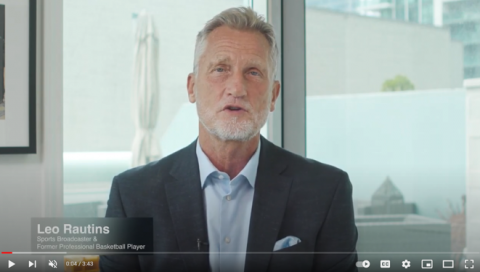
Pain and Identity: Professional Athletes and Military Veterans
Pain and Identity: Professional Athletes and Military Veterans
Topic
Presented by: Leo Rautins, Former NBA Player and TV Personality, at the 2023 Canadian Pain Society Scientific Meeting sponsored by the Chronic Pain Centre of Excellence for Canadian Veterans.
Summary: In this 3-minute video, Leo Rautins explains the connection between pain and identity through his own experience transitioning from a professional athlete to a TV broadcaster with chronic low back pain, identifying similarities with Veterans. He invites you, Veterans who served their country, to now serve yourself, and he provides tips to succeed.
Pain and Identity: Professional Athletes and Military Veterans offers
Videos
The Impact Of Chronic Pain on Veteran Families
The Impact Of Chronic Pain on Veteran Families
Topic
Developed by: The Chronic Pain Centre of Excellence for Canadian Veterans in collaboration with Melanie Noel, PhD, RPsych, and Samantha Novek, PhD.
Summary: This 3-minute video summarizes the insights from 12 Veteran families interviewed about the impacts of chronic pain on their family life and children. It also features one of these Veteran families sharing their own experience.
The Impact Of Chronic Pain on Veteran Families offers
Videos
Veteran and Family Well-Being video series
Veteran and Family Well-Being video series
Topic
Presented by: The Chronic Pain Centre of Excellence for Canadian Veterans
Summary: This series of webinars provide education on the evolution of pain management and current best practices in evidence-based interdisciplinary care. Presented in an accessible manner, the target audience is veterans, their families, health care professionals, case managers, and researchers. The reoccurring theme throughout is the importance of prioritizing the overall quality of life of a Veteran and their families using a holistic and interdisciplinary approach to help guide their chronic pain management programs.
Veteran and Family Well-Being video series offers
Videos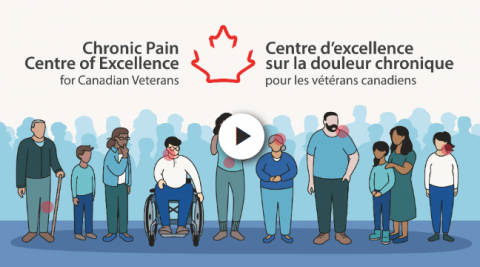
Chronic Pain Centre of Excellence for Canadian Veterans
Chronic Pain Centre of Excellence for Canadian Veterans
Topic
Pain
Provided by: The Chronic Pain Centre of Excellence for Canadian Veterans (CPCoE) works as a research centre to improve the understanding of Veteran-specific chronic pain and how best to manage it. Our mission is to foster a national network of interdisciplinary pain management centres using research and evidence-based strategies to improve care for Canadian Armed Forces Veterans and their families.
Summary: By watching this video, you will discover how the CPCoE partners directly with Veterans to prioritize research, and how they share these insights to improve treatment options and care policy for Veterans.
You can also visit their website (www.veteranschronicpain.ca) to learn more and find evidence-based educational resources specifically tailored to help you, your family, or your clinician understand and manage veteran-specific chronic pain.
Chronic Pain Centre of Excellence for Canadian Veterans offers
Tools and Resources Videos
Tinnitus Myths
Tinnitus Myths
Topic

Provided by: One of CPCoE’s funded researchers, Dr. Philippe Fournier, Assistant Professor of Audiology in the Faculty of Medicine at Laval University, and Principal Investigator at CIRRIS Lab.
Summary: Watch this series of five short videos (1–3 minutes each) to discover the scientific truth behind common tinnitus myths and explore evidence-based solutions. Each video debunks a major misconception about tinnitus. Learn how tinnitus functions as a symptom rather than a disease, why it impacts all age groups, why it doesn't automatically worsen over time or with coffee, and how it can be actively managed.
Tinnitus Myths offers
Videos
Pain U Online
Pain U Online
Topic
Pain
Developed by: The Toronto Academic Pain Medicine Institute (TAPMI).
Summary: TAPMI presents 20 educational modules on key elements of chronic pain management to help you:
- Become knowledgeable about chronic pain
- Focus on goals that are important to you
- Minimize stress
- Identify warning signs and avoid flare ups
- Improve overall quality of life
- Stay active to improve your pain levels
- Pace your activities to reduce your risk of flare up
- Practice daily relaxation techniques
- Learn how to communicate with family, friends, and care providers
- Improve your sleep so you can cope better with your pain
Pain U Online offers
Articles
What is chronic pain and how does it work?
What is chronic pain and how does it work?
Topic
Pain
Presented by: Linda Geddes, Guardian Science Correspondent with The Guardian Australia.
Summary: Sufferers of chronic pain have long been told it's all in their head. We now know that's not true. This series looks at why doctors are playing catch-up on chronic pain conditions like endometriosis, migraine and more – and what they have to do with Covid. For years people with conditions such as fibromyalgia, endometriosis, chronic fatigue or back pain – to name just a few – have been told the pain is all in their head. With no obvious physical symptoms, nociplastic pain can be difficult to diagnose but its effects are very, very real. Research suggests that the immune system plays a role in nociplastic pain, giving people 'feel bad' symptoms including fatigue, anxiety and nausea.
What is chronic pain and how does it work? offers
Videos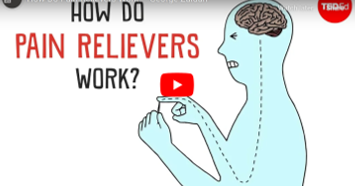
How Do Pain Relievers Work?
How Do Pain Relievers Work?
Topic
Pain
Presented by: George Zaidan, animated by Augenblick Studios. George Zaidan is a science communicator, television and web host, and producer.
Summary: In this 4-minute video, learn about the basic physiology of how humans experience pain, and the mechanics of the medicines we've invented to block or circumvent that discomfort.
How Do Pain Relievers Work? offers
Videos
My SleepWell
My SleepWell
Topic
Sleep
Developed by: Drs. David Gardner and Andrea Murphy from Dalhousie University, Halifax, Nova Scotia, Canada and contributed to by psychologists, psychiatrists, family doctors, pharmacists, people who live with insomnia, researchers, and sleep experts to make sure that our recommendations and content are accurate and practical.
Summary: Sleepwell has two main goals: 1) to help people with insomnia get their sleep back without medications; and 2) to help people stop taking sleeping pills safely and effectively. Sleepwell recommends CBTi (cognitive behavioural therapy for insomnia) because it has excellent evidence that it works. The challenge for many is getting access to CBTi. This is where Sleepwell comes in. The website includes a highly scrutinized short list of recommended CBTi resources to help get you started without delay. Their recommendations take a self-help approach to CBTi rather than requiring that a therapist be involved, which is also a great option but not available to most people.
My SleepWell offers
Articles Tools and Resources
Movement With Pain
Movement With Pain
Topic
Movement
Presented by: painHEALTH and people living with pain. PainHEALTH is an initiaive from the Government of Western Australia, Department of Health aiming to ease musculoskeletal pain through clinically supported information, tips, support and personal stories to help people better understand and co-manage their musculoskeletal pain conditions.
Summary: This video reviews the importance of remaining active while living with pain and offers ideas for increasing your physical activity such as walking with a friend or family member.
Movement With Pain offers
Videos
Empowered Management
Empowered Management
Topic
Pain
Developed by: Dr. Rosemary Wilson, NP, PhD from Queen's University and Dr. Rachael Bosma, PhD from Women's College Hospital in Toronto, and co-designed with people with lived experience.
Summary: Gain control over your life and participate in the things that are important to you. This course provides you with tools to be an active participant in your pain management. Key concepts and terms coverved include:
- Setting Expectations: Module 1
- Explaining Pain: Module 2
- Biopsychosocial Approaches: Module 3
- Strategies: Module 4
- Self-Compassion: Module 5
- Values: Module 6
- Goals: Module 7
- Communication: Module 8
Note: This course is available on the Power Over Pain Thinkific learning platform. You will need to create a free account on Thinkific to partake in the course and keep track of your progress.
Empowered Management offers
Self-directed Courses
Coach Insomnia App
Coach Insomnia App
Topic
Sleep
Provided by: The app was created based on the therapy manual Cognitive Behavioral Therapy for Insomnia in Veterans and was developed collaboratively by VA’s National Center for PTSD,
Summary: Coach Insomnia is a free mobile app designed to help you improve your sleep. Through a 5-week step-by-step plan, it teaches you about insomnia, healthy sleep habits, and strategies to break patterns that interfere with rest. You can continue using the app afterwards to track your sleep and maintain progress. Insomnia Coach can be used on its own as a self-care tool or alongside professional care, and it’s grounded in proven, research-based techniques. Features include:
Coach Insomnia App offers
Articles Tools and ResourcesDon't see what you're looking for?
We routinely add new resources to the Portal. Stay up-to-date through our monthly newsletter!
Discover Portal Services



About
Are you a Veteran living with chronic pain? You’re not alone. Chronic pain affects 2 in 5 Canadian Veterans, with female Veterans experiencing a higher rate of approximately 50%. Each Veteran’s experience with pain is unique, and the severity and impact on daily life can vary greatly.
Military Mindset and Transition can Impact Pain
A key factor affecting pain levels in Veterans is their transition from military to civilian life. While some Veterans adapt easily, others may struggle with losing their sense of identity and finding a new purpose. Military culture often emphasizes putting the mission first and self-care last, along with avoiding displays of vulnerability. As a result, many Veterans may downplay their pain or put off seeking treatment.
Some Veterans are More Impacted than Others
Some Veterans face greater challenges managing pain due to healthcare disparities, past trauma, and life transitions. For example, Black, Indigenous, and other Veterans of colour are more likely to experience higher levels of pain than white Veterans. Similarly, 1 in 5 Veterans who identify as part of gender or sexual minorities reports higher pain levels compared to the general Veteran population. Additionally, more than 3 in 5 Veterans with chronic pain (over 60%) have also been diagnosed with a mental health condition, which can significantly impact their pain, treatment, and overall well-being.
Finding the Right Care and Resources
Veterans living with chronic pain benefit from care that’s personalized to their unique needs, values, and goals. It’s also important to consider their readiness for treatment. By focusing on the whole person and offering tools like pain education and self-management techniques, Veterans can gain better control over their pain and improve their overall quality of life.
Get started with the resources below!
All the resources included were co-created with or selected by Veterans.
For Clinicians
Caring for Veterans requires understanding the unique health challenges stemming from their military service, such as chronic pain, PTSD, and physical injuries. Listening to their experiences, building trust, and showing respect are essential for providing meaningful and effective care. Being aware of available resources and support systems, like the Chronic Pain Centre of Excellence’s Communication Tool, can help clinicians enhance communication and foster stronger patient-provider relationships.
Resources for Veterans
The Most Painful Podcast
The Most Painful Podcast
Topic
Pain
Developed by: The Chronic Pain Centre of Excellence for Canadian Veterans.
Summary: This podcast covers all aspects of chronic pain by presenting evidence-based information that provides better insight into chronic pain. Recent Government of Canada research found that Veterans are twice as likely to suffer from chronic pain compared to others in the Canadian population. We aim to investigate how this impacts Veterans, and their families. We explore topics such cannabis and psychedelics, and do they help treat chronic pain? We also investigate back surgery, military identity and what military and professional athletes have in common with identity. The evidence-based information on the show will help Veterans, clinicians, researchers, and anyone suffering from chronic pain. It is a 360-degree approach to education on chronic pain.
The Most Painful Podcast offers
Podcasts
Yoga therapy for Veterans
Yoga therapy for Veterans
Topic
Developed by: The Chronic Pain Centre of Excellence for Canadian Veterans in collaboration with Neil Pearson PT, MSc, C-IAYT, ERYTS00.
Summary: This one-page infographic summarizes research findings about how yoga therapy is used by Veterans to manage pain. Learn about the benefits of yoga reported by Veterans, tips on how to get started, and links to YouTube Channels to give yoga a try.
Yoga therapy for Veterans offers
Articles
Exploring Veterans’ Use of Cannabis for Chronic Pain
Exploring Veterans’ Use of Cannabis for Chronic Pain
Topic
Developed by: The Chronic Pain Centre of Excellence for Canadian Veterans in collaboration with Gregory K. Tippin, PhD, Vikas Parihar, Pharm.D.
Summary: This 2-minute video summarizes early insights from a research study that sought to better understand Veterans’ experiences with using cannabis. Learn how cannabis was helpful for some Veterans with chronic pain and what common questions and concerns they raised to inform future research.
Exploring Veterans’ Use of Cannabis for Chronic Pain offers
Videos
Effectiveness of Interdisciplinary Pain Care for Veterans
Effectiveness of Interdisciplinary Pain Care for Veterans
Topic
Developed by: The Chronic Pain Centre of Excellence for Canadian Veterans in collaboration with Bryan Cater and Sharon Horan.
Summary: With this 2-minute video, you will be introduced to the model of interdisciplinary care in a way that is easy to understand, and learn how it was helpful for a group of Veteran patients in St. John’s, Newfoundland.
Effectiveness of Interdisciplinary Pain Care for Veterans offers
Videos
Pain and Identity: Professional Athletes and Military Veterans
Pain and Identity: Professional Athletes and Military Veterans
Topic
Presented by: Leo Rautins, Former NBA Player and TV Personality, at the 2023 Canadian Pain Society Scientific Meeting sponsored by the Chronic Pain Centre of Excellence for Canadian Veterans.
Summary: In this 3-minute video, Leo Rautins explains the connection between pain and identity through his own experience transitioning from a professional athlete to a TV broadcaster with chronic low back pain, identifying similarities with Veterans. He invites you, Veterans who served their country, to now serve yourself, and he provides tips to succeed.
Pain and Identity: Professional Athletes and Military Veterans offers
Videos
The Impact Of Chronic Pain on Veteran Families
The Impact Of Chronic Pain on Veteran Families
Topic
Developed by: The Chronic Pain Centre of Excellence for Canadian Veterans in collaboration with Melanie Noel, PhD, RPsych, and Samantha Novek, PhD.
Summary: This 3-minute video summarizes the insights from 12 Veteran families interviewed about the impacts of chronic pain on their family life and children. It also features one of these Veteran families sharing their own experience.
The Impact Of Chronic Pain on Veteran Families offers
Videos
Veteran and Family Well-Being video series
Veteran and Family Well-Being video series
Topic
Presented by: The Chronic Pain Centre of Excellence for Canadian Veterans
Summary: This series of webinars provide education on the evolution of pain management and current best practices in evidence-based interdisciplinary care. Presented in an accessible manner, the target audience is veterans, their families, health care professionals, case managers, and researchers. The reoccurring theme throughout is the importance of prioritizing the overall quality of life of a Veteran and their families using a holistic and interdisciplinary approach to help guide their chronic pain management programs.
Veteran and Family Well-Being video series offers
Videos
Chronic Pain Centre of Excellence for Canadian Veterans
Chronic Pain Centre of Excellence for Canadian Veterans
Topic
Pain
Provided by: The Chronic Pain Centre of Excellence for Canadian Veterans (CPCoE) works as a research centre to improve the understanding of Veteran-specific chronic pain and how best to manage it. Our mission is to foster a national network of interdisciplinary pain management centres using research and evidence-based strategies to improve care for Canadian Armed Forces Veterans and their families.
Summary: By watching this video, you will discover how the CPCoE partners directly with Veterans to prioritize research, and how they share these insights to improve treatment options and care policy for Veterans.
You can also visit their website (www.veteranschronicpain.ca) to learn more and find evidence-based educational resources specifically tailored to help you, your family, or your clinician understand and manage veteran-specific chronic pain.
Chronic Pain Centre of Excellence for Canadian Veterans offers
Tools and Resources Videos
Tinnitus Myths
Tinnitus Myths
Topic
Provided by: One of CPCoE’s funded researchers, Dr. Philippe Fournier, Assistant Professor of Audiology in the Faculty of Medicine at Laval University, and Principal Investigator at CIRRIS Lab.
Summary: Watch this series of five short videos (1–3 minutes each) to discover the scientific truth behind common tinnitus myths and explore evidence-based solutions. Each video debunks a major misconception about tinnitus. Learn how tinnitus functions as a symptom rather than a disease, why it impacts all age groups, why it doesn't automatically worsen over time or with coffee, and how it can be actively managed.
Tinnitus Myths offers
VideosRelated Resources
Pain U Online
Pain U Online
Topic
Pain
Developed by: The Toronto Academic Pain Medicine Institute (TAPMI).
Summary: TAPMI presents 20 educational modules on key elements of chronic pain management to help you:
- Become knowledgeable about chronic pain
- Focus on goals that are important to you
- Minimize stress
- Identify warning signs and avoid flare ups
- Improve overall quality of life
- Stay active to improve your pain levels
- Pace your activities to reduce your risk of flare up
- Practice daily relaxation techniques
- Learn how to communicate with family, friends, and care providers
- Improve your sleep so you can cope better with your pain
Pain U Online offers
Articles
What is chronic pain and how does it work?
What is chronic pain and how does it work?
Topic
Pain
Presented by: Linda Geddes, Guardian Science Correspondent with The Guardian Australia.
Summary: Sufferers of chronic pain have long been told it's all in their head. We now know that's not true. This series looks at why doctors are playing catch-up on chronic pain conditions like endometriosis, migraine and more – and what they have to do with Covid. For years people with conditions such as fibromyalgia, endometriosis, chronic fatigue or back pain – to name just a few – have been told the pain is all in their head. With no obvious physical symptoms, nociplastic pain can be difficult to diagnose but its effects are very, very real. Research suggests that the immune system plays a role in nociplastic pain, giving people 'feel bad' symptoms including fatigue, anxiety and nausea.
What is chronic pain and how does it work? offers
Videos
How Do Pain Relievers Work?
How Do Pain Relievers Work?
Topic
Pain
Presented by: George Zaidan, animated by Augenblick Studios. George Zaidan is a science communicator, television and web host, and producer.
Summary: In this 4-minute video, learn about the basic physiology of how humans experience pain, and the mechanics of the medicines we've invented to block or circumvent that discomfort.
How Do Pain Relievers Work? offers
Videos
My SleepWell
My SleepWell
Topic
Sleep
Developed by: Drs. David Gardner and Andrea Murphy from Dalhousie University, Halifax, Nova Scotia, Canada and contributed to by psychologists, psychiatrists, family doctors, pharmacists, people who live with insomnia, researchers, and sleep experts to make sure that our recommendations and content are accurate and practical.
Summary: Sleepwell has two main goals: 1) to help people with insomnia get their sleep back without medications; and 2) to help people stop taking sleeping pills safely and effectively. Sleepwell recommends CBTi (cognitive behavioural therapy for insomnia) because it has excellent evidence that it works. The challenge for many is getting access to CBTi. This is where Sleepwell comes in. The website includes a highly scrutinized short list of recommended CBTi resources to help get you started without delay. Their recommendations take a self-help approach to CBTi rather than requiring that a therapist be involved, which is also a great option but not available to most people.
My SleepWell offers
Articles Tools and Resources
Movement With Pain
Movement With Pain
Topic
Movement
Presented by: painHEALTH and people living with pain. PainHEALTH is an initiaive from the Government of Western Australia, Department of Health aiming to ease musculoskeletal pain through clinically supported information, tips, support and personal stories to help people better understand and co-manage their musculoskeletal pain conditions.
Summary: This video reviews the importance of remaining active while living with pain and offers ideas for increasing your physical activity such as walking with a friend or family member.
Movement With Pain offers
Videos
Empowered Management
Empowered Management
Topic
Pain
Developed by: Dr. Rosemary Wilson, NP, PhD from Queen's University and Dr. Rachael Bosma, PhD from Women's College Hospital in Toronto, and co-designed with people with lived experience.
Summary: Gain control over your life and participate in the things that are important to you. This course provides you with tools to be an active participant in your pain management. Key concepts and terms coverved include:
- Setting Expectations: Module 1
- Explaining Pain: Module 2
- Biopsychosocial Approaches: Module 3
- Strategies: Module 4
- Self-Compassion: Module 5
- Values: Module 6
- Goals: Module 7
- Communication: Module 8
Note: This course is available on the Power Over Pain Thinkific learning platform. You will need to create a free account on Thinkific to partake in the course and keep track of your progress.
Empowered Management offers
Self-directed Courses
Coach Insomnia App
Coach Insomnia App
Topic
Sleep
Provided by: The app was created based on the therapy manual Cognitive Behavioral Therapy for Insomnia in Veterans and was developed collaboratively by VA’s National Center for PTSD,
Summary: Coach Insomnia is a free mobile app designed to help you improve your sleep. Through a 5-week step-by-step plan, it teaches you about insomnia, healthy sleep habits, and strategies to break patterns that interfere with rest. You can continue using the app afterwards to track your sleep and maintain progress. Insomnia Coach can be used on its own as a self-care tool or alongside professional care, and it’s grounded in proven, research-based techniques. Features include: